Nexus Point
Personal project
Year
2025
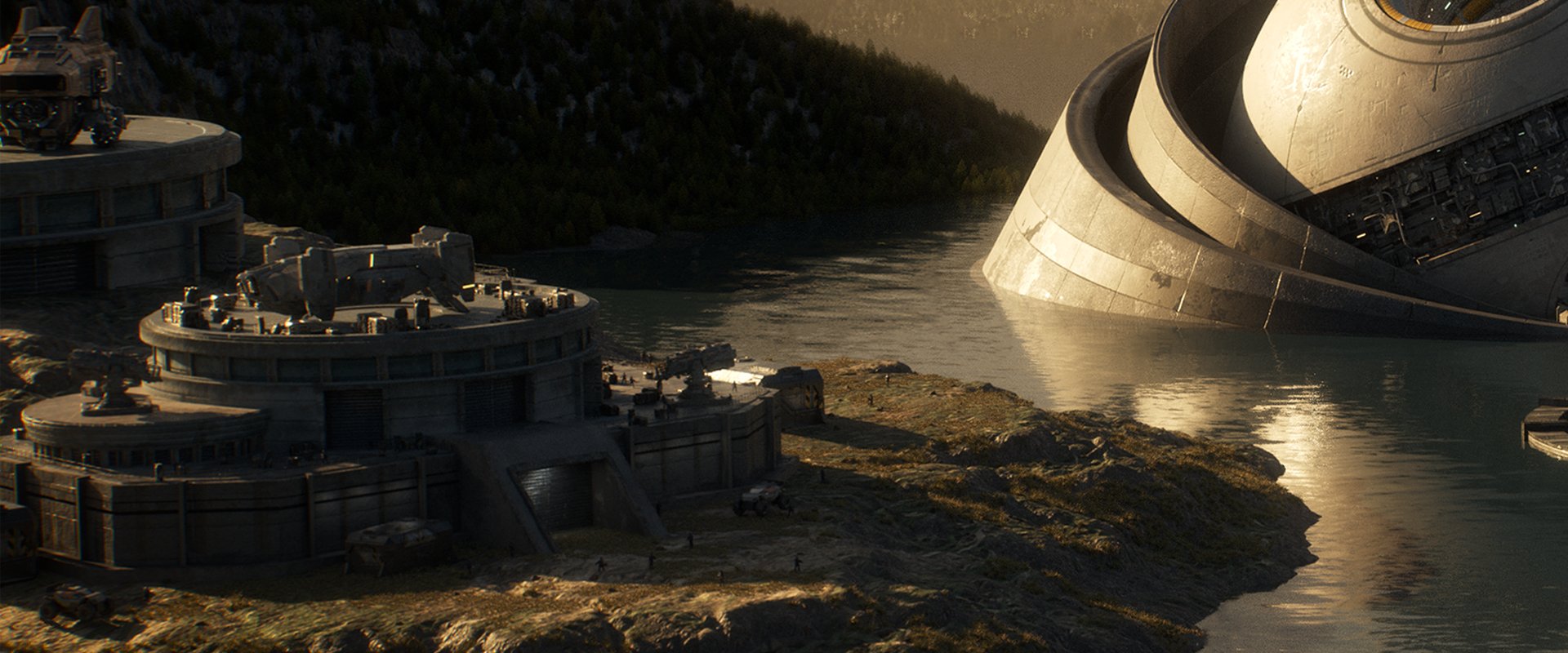
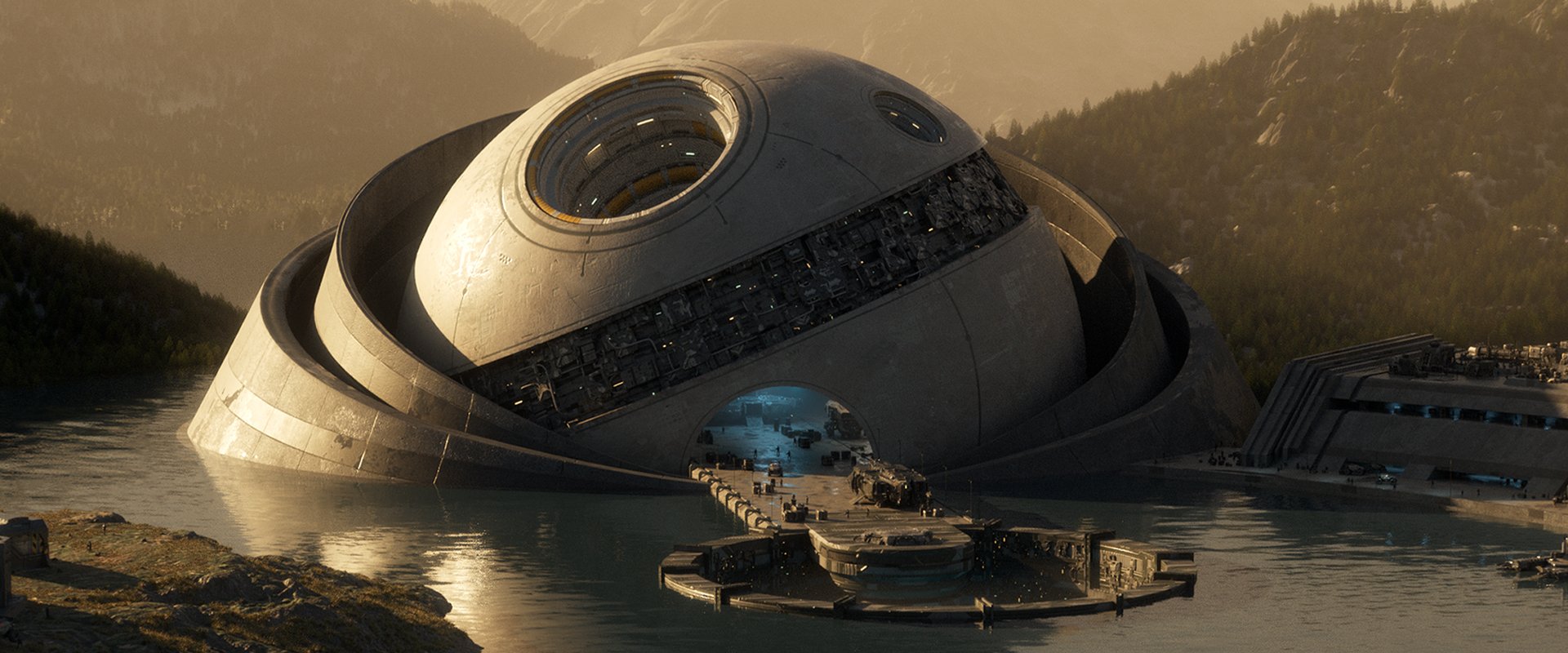
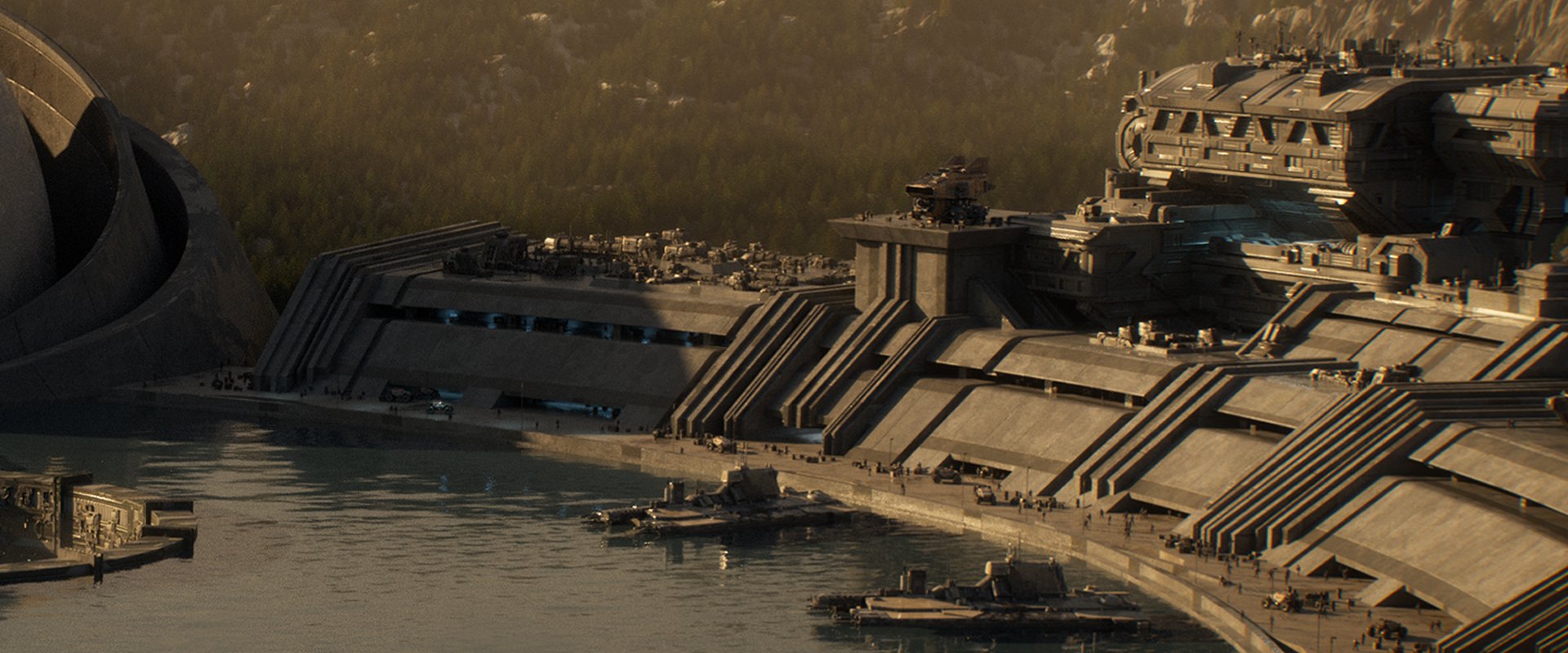
This project grew from my passion for cinematic sci-fi environments that combine grand scale with rich detail. Inspired by films like The Creator, I wanted to challenge myself with a large-scale scene that tells a story through its design and atmosphere. My approach focused on balancing intricate details with overall composition to evoke curiosity and emotion, using each element to hint at a larger narrative without words.
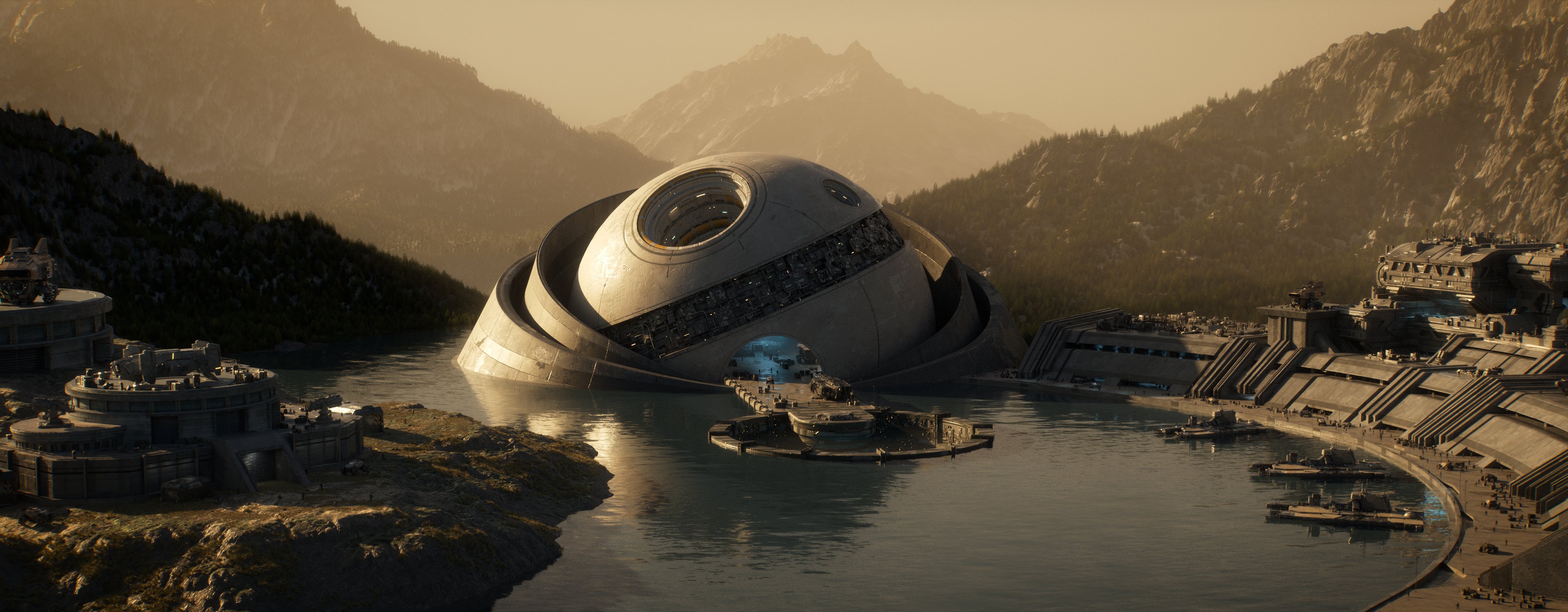
01 Inspiration & references
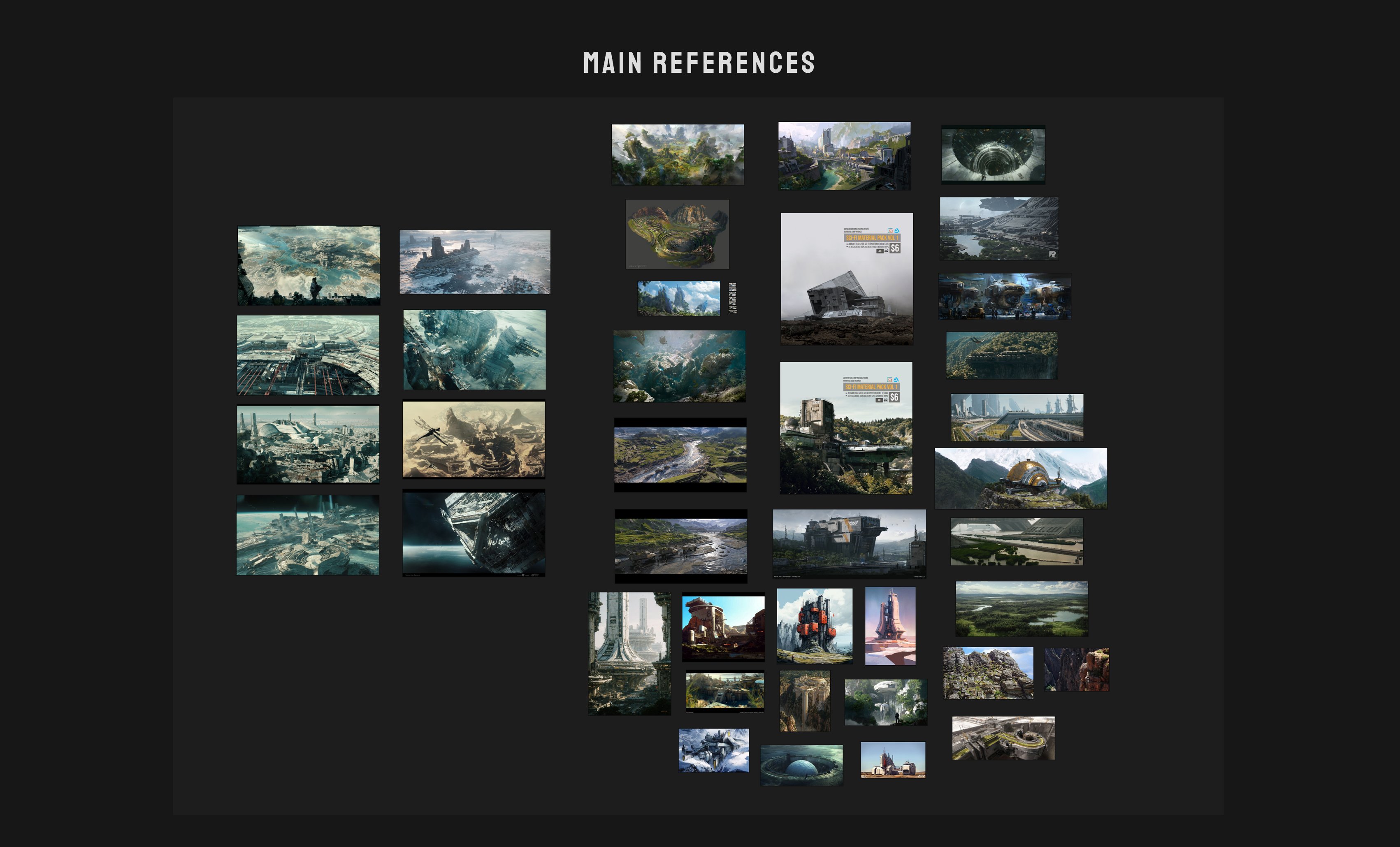
This piece was heavily inspired by the incredible work of Federico Pelat, whose cinematic compositions and sci-fi realism have always resonated with me.
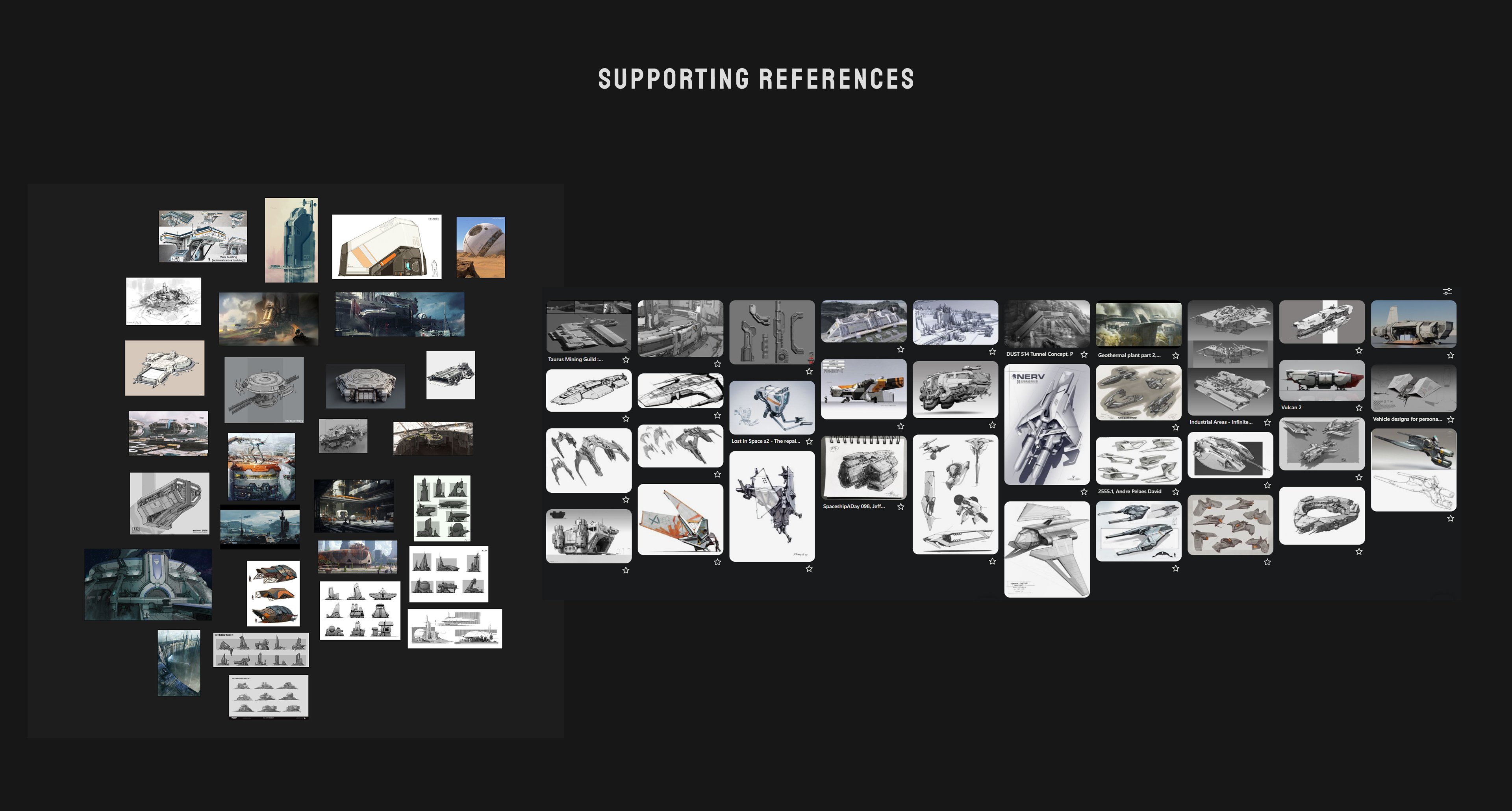
I began the project by gathering visual references to ground the concept. I started with Pinterest to collect real-world locations, lighting moods, and architectural elements that could help bring realism into the scene. At the same time, I explored a wide range of AI-generated concept art to experiment with fresh compositions, design language, and aesthetic choices that leaned more into the sci-fi world I wanted to create. Combining these two approaches�stylized vision and real-world grounding�helped me define the overall tone and believability of the environment. This reference-gathering phase was key to setting a strong visual direction before moving into 3D.
02 Production pipeline & modular assets
For this project, I aimed to follow a structured production pipeline to better prepare myself for real-world industry workflows. From asset creation and layout to procedural scattering, lighting, and final compositing, I treated the entire process as a professional-level exercise to train both my artistic eye and technical discipline.
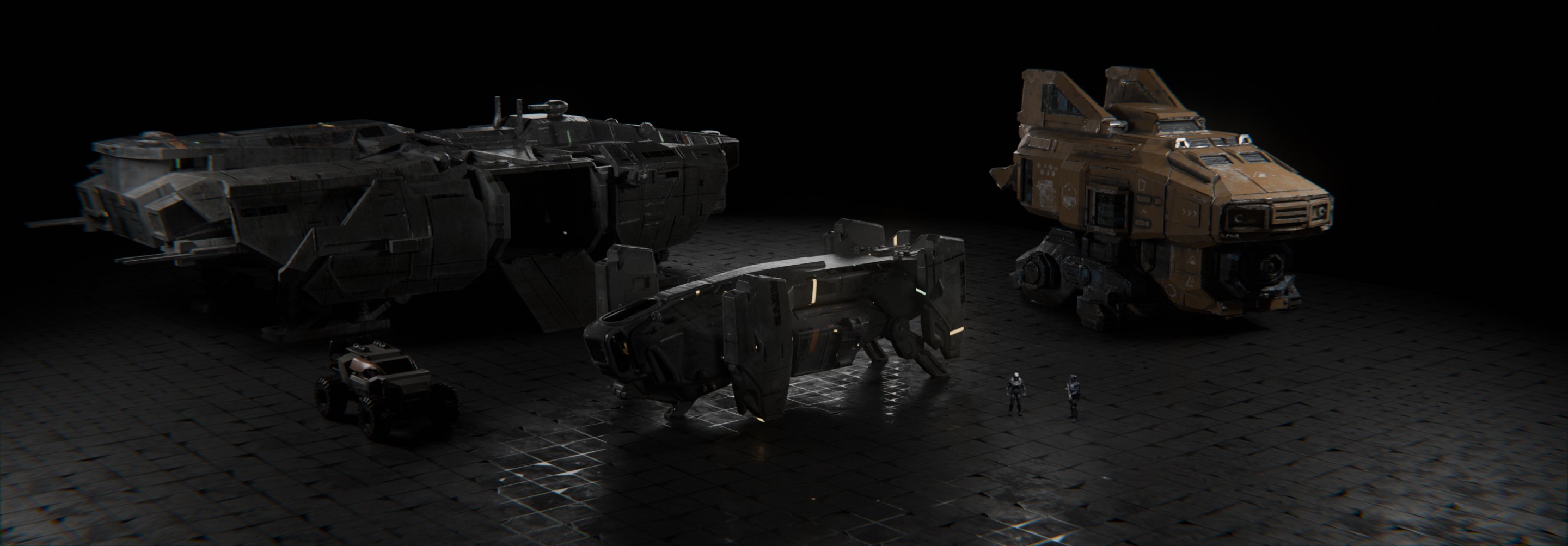
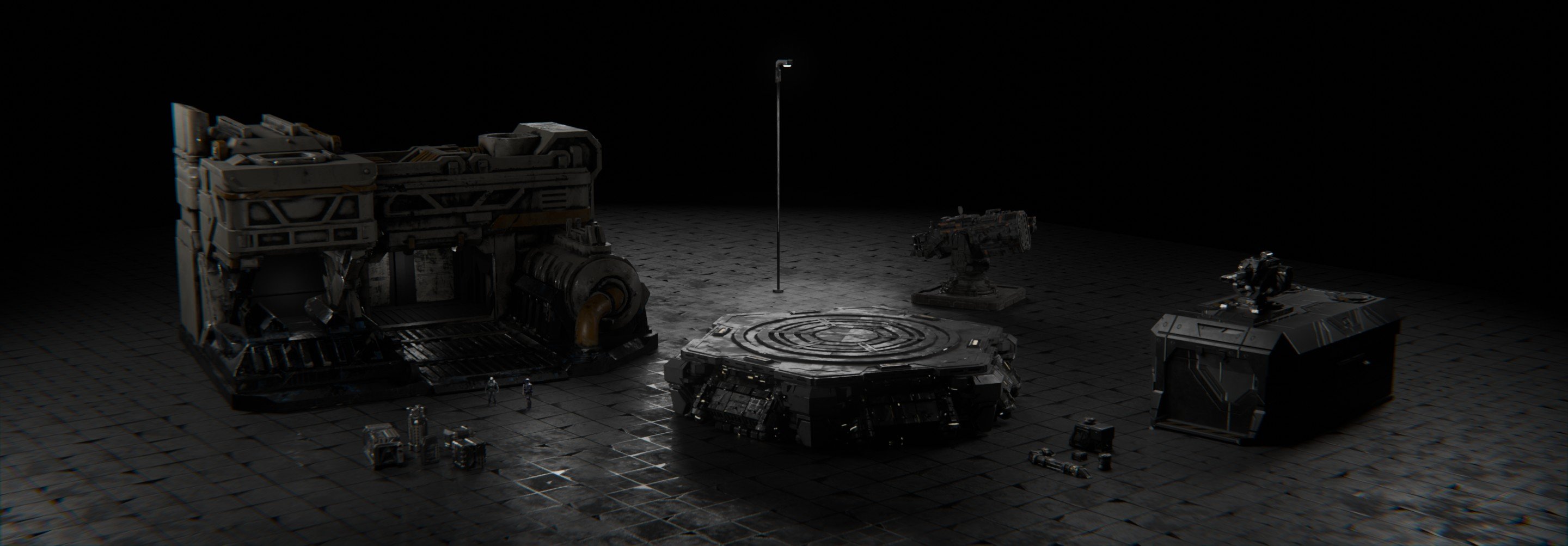
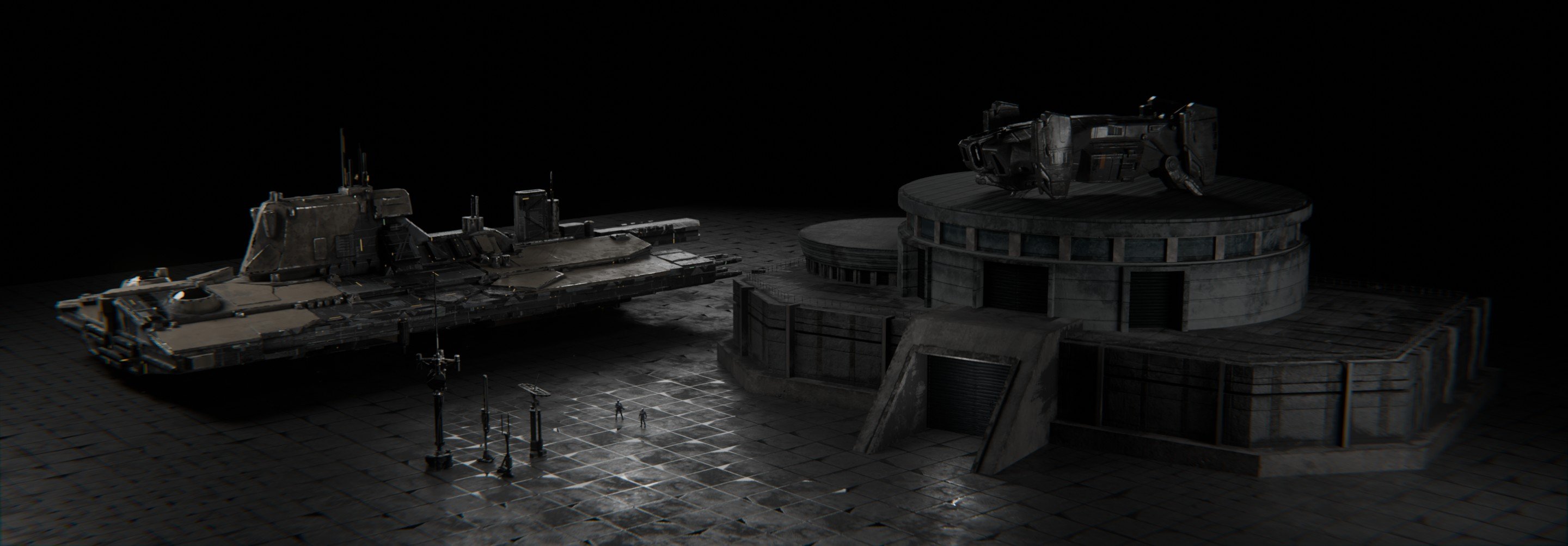
Once I had my references lined up, I began by creating a custom kit of modular assets that I could later use during the layout stage. I started modeling in ZBrush and Blender, focusing on forms that could be reused and adapted throughout the scene. Many of these assets were textured in Substance Painter, while others were designed to be procedurally instanced and textured directly inside Houdini. This hybrid approach allowed me to keep the scene flexible and efficient, especially when populating complex areas with a high level of detail.
03 Terrain & procedural scattering
I created the terrain and mountains in Gaea,� then brought the resulting heightfields into Houdini, which gave me full control to integrate them into the environment. Using Houdini�s powerful instancing system, I was able to scatter thousands of objects�trees, grass, rocks, and other elements�across the terrain in a highly optimized and efficient way. This workflow allowed me to maintain both visual complexity and performance throughout the layout stage.
04 Lighting, rendering & compositing
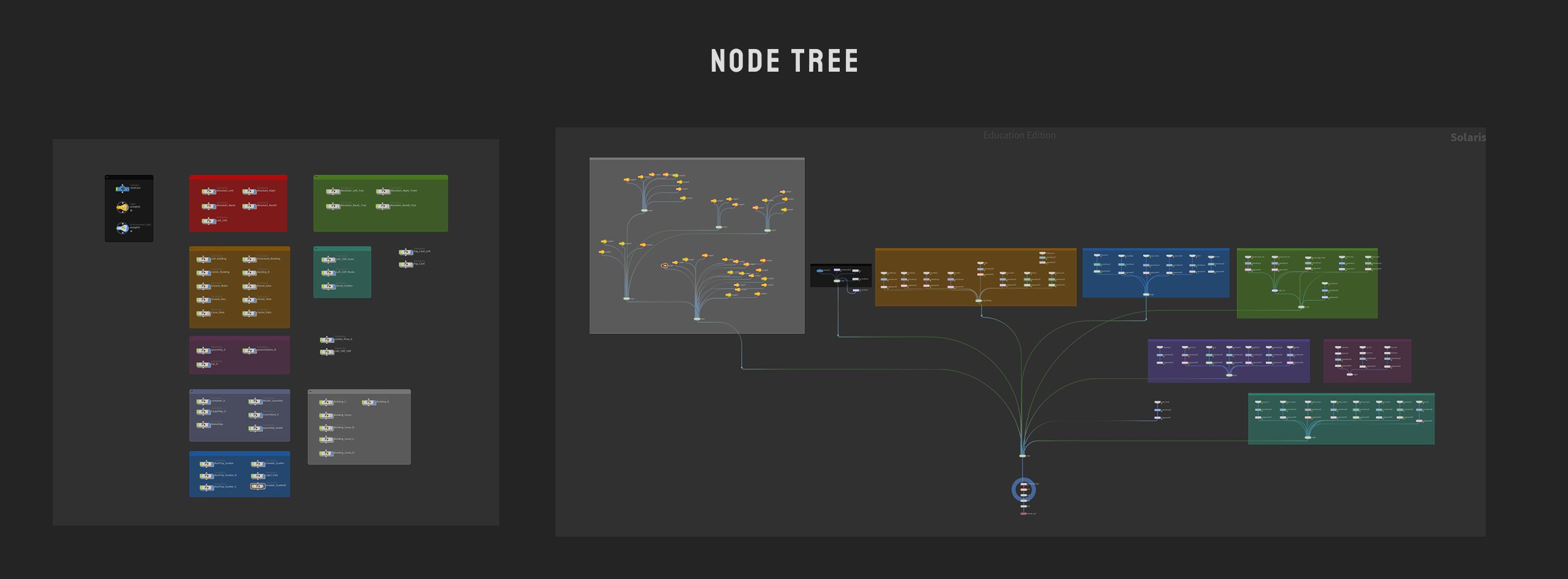
Working with Solaris and Karma streamlined the rendering process, allowing for efficient scene management and lookdev. I rendered the final shots using Karma and handled the compositing in Nuke to bring everything together with proper depth, color balance, and atmosphere.
Production tools
ZBrush · Blender · Substance Painter · Gaea · Houdini · Solaris · Karma · Nuke